

From dining rooms and living rooms to foyers, staircases, bedrooms, and open-concept spaces, the right contemporary chandelier can help define an area while providing comfortable and functional illumination. Choosing the best chandelier involves more than simply finding a design you like. Size, ceiling height, room proportions, furniture placement, light output, finish, and installation height all contribute to how well the fixture works within the space.
Contemporary Chandeliers: Modern Elegance for Every Home
BROWSE CONTEMPORARY CHANDELIERS






VISIT OUR SHOWROOM

CONTEMPORARY CHANDELIERS GUIDE
Contemporary chandeliers offer a balance of modern design, practical lighting, and visual impact. Unlike highly traditional chandeliers with ornate detailing or strictly minimalist modern fixtures, contemporary chandeliers often combine clean forms with creative shapes, mixed materials, interesting finishes, and new lighting technology. This makes them a versatile choice for both newly designed interiors and homes being updated with a fresher look.
Choosing the Right Contemporary Chandelier Style
Contemporary chandeliers are available in a wide range of designs, allowing them to complement many different interiors.
Linear Chandeliers:
Long, horizontal chandeliers work especially well above rectangular dining tables, kitchen islands, and long seating areas. Their shape helps distribute light evenly while visually following the proportions of the furniture below.
Ring and Circular Chandeliers:
Single-ring and multi-ring chandeliers create a clean, architectural look. They are particularly effective in dining rooms, living rooms, foyers, and rooms with higher ceilings. Multi-tier ring chandeliers can also provide dramatic scale without the ornate appearance of a traditional chandelier.
Globe and Multi-Light Chandeliers:
Fixtures using glass globes or multiple individual light sources provide a softer contemporary look. Clear, frosted, smoked, or opal glass can significantly change the character and light diffusion of the fixture.
Geometric and Sculptural Chandeliers:
Contemporary lighting often treats the chandelier as a piece of decorative art. Asymmetrical arrangements, intersecting forms, branches, curves, and geometric frames can create a strong focal point even when the fixture is turned off.
Contemporary Crystal Chandeliers:
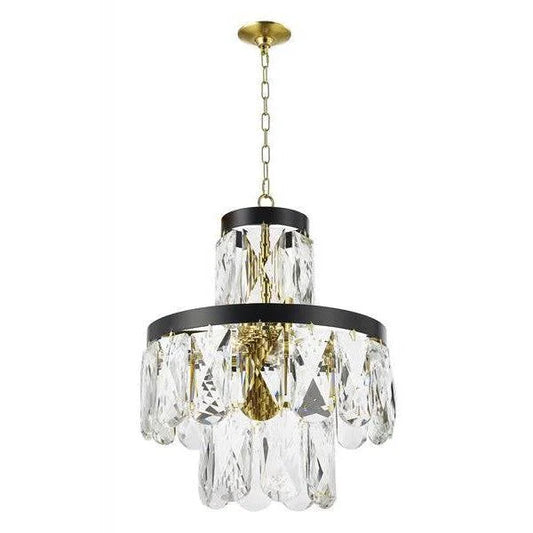
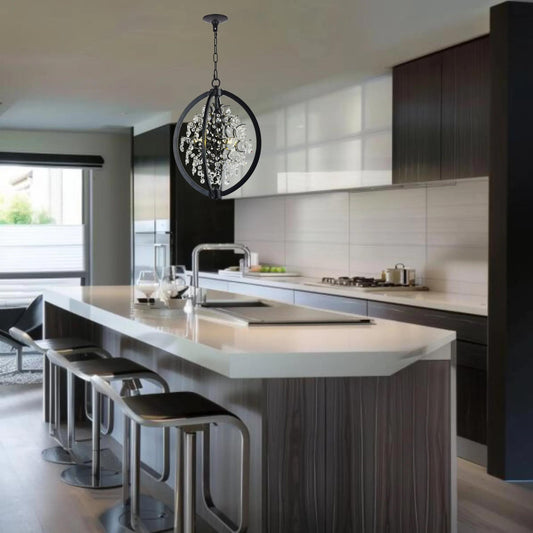
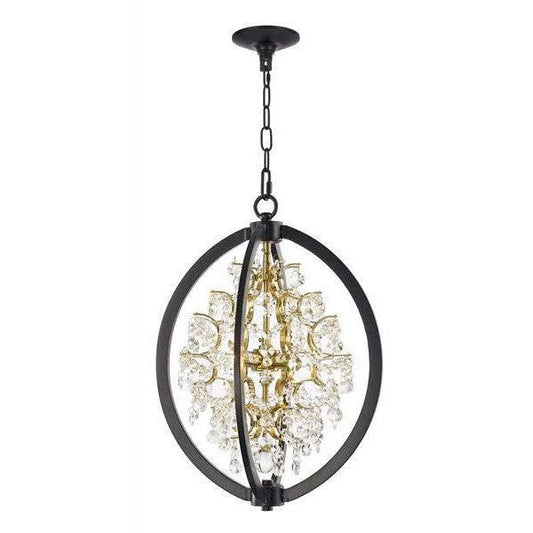
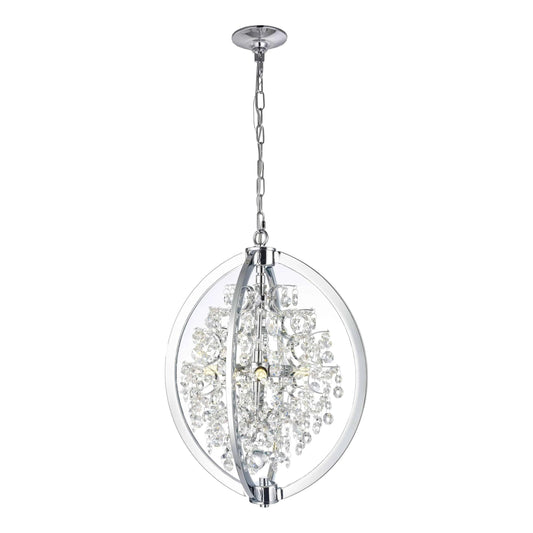
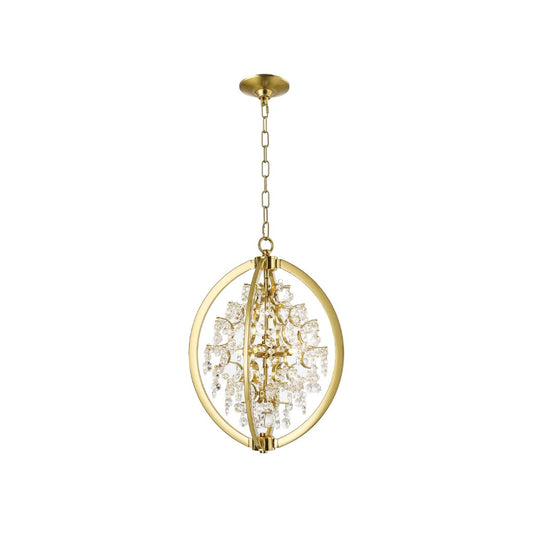
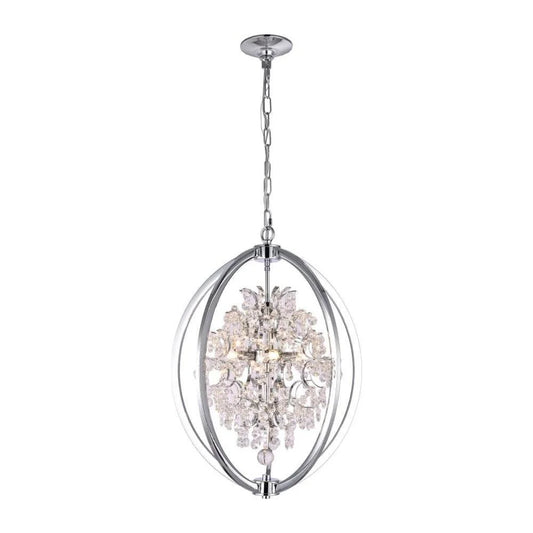
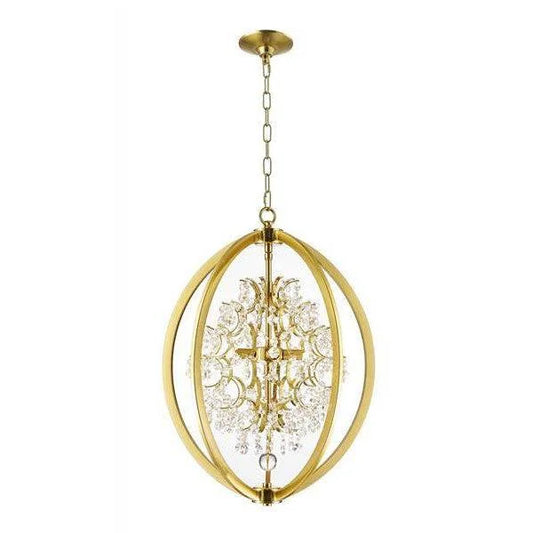
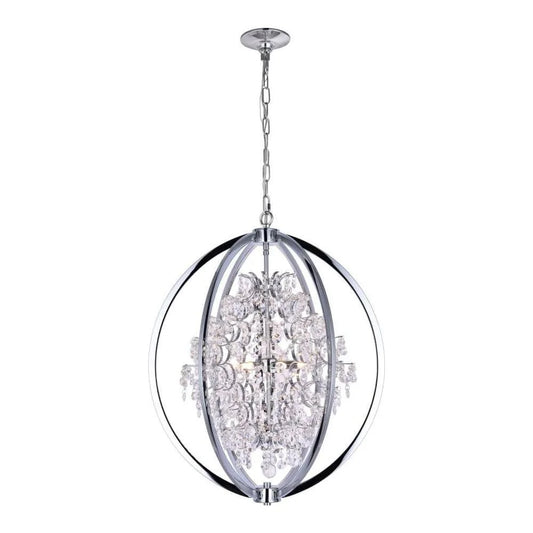
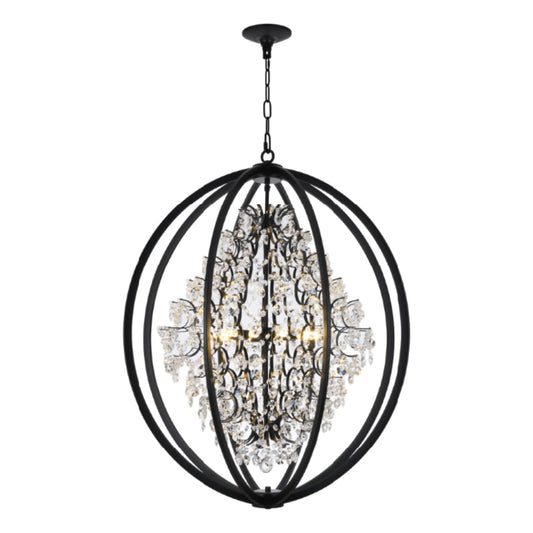
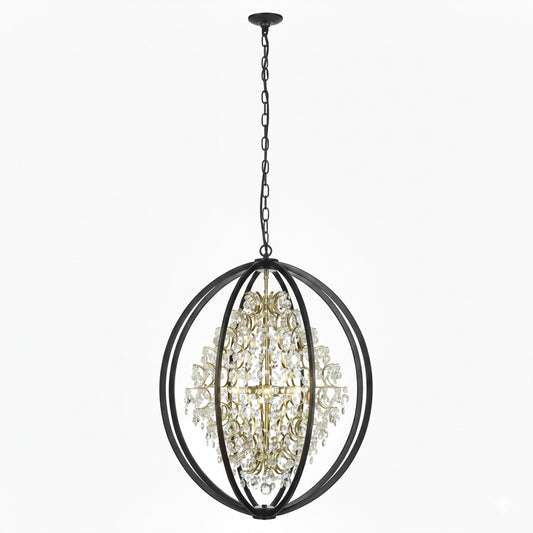
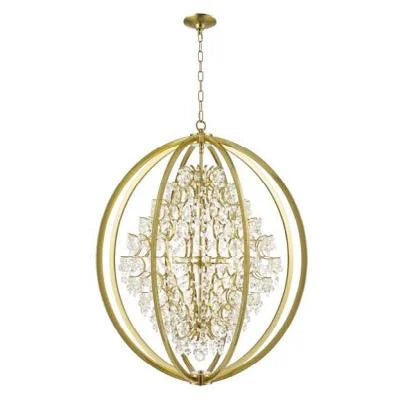
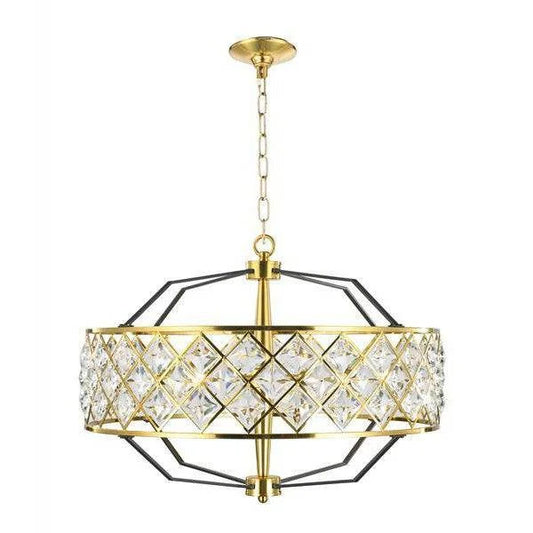
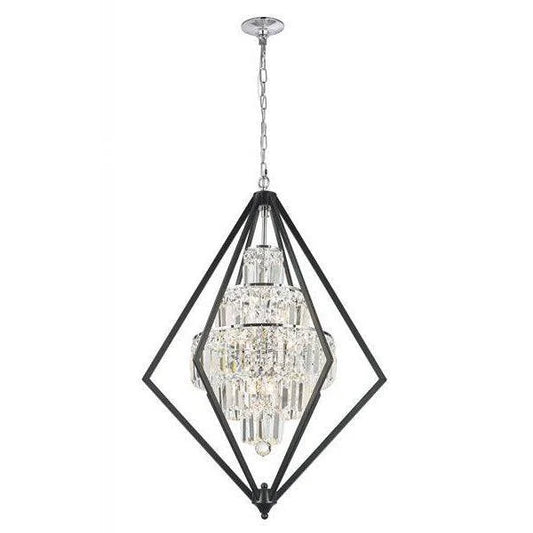
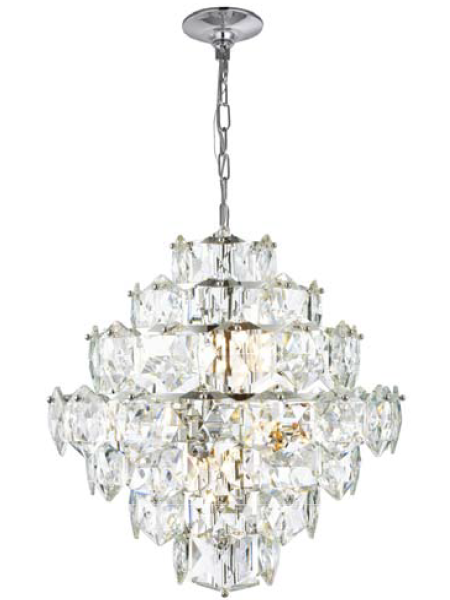
Crystal is not limited to traditional lighting. Contemporary crystal chandeliers combine crystal elements with simpler frames, streamlined shapes, integrated LEDs, or finishes such as black, chrome, and warm brass for a more current appearance.


How to Choose the Right Chandelier Size
Proper proportion is one of the most important factors when choosing a chandelier. A fixture that is too small may disappear within the room, while an oversized chandelier can overwhelm the surrounding furniture and architecture.
For chandeliers placed over a dining table, the fixture should generally relate to the dimensions of the table rather than the entire room. Many dining room chandeliers look best when their width is approximately one-half to two-thirds of the table width, although the ideal proportion can vary depending on the chandelier design.
For chandeliers installed in an open room without furniture directly below, room dimensions become more important. Larger rooms and high ceilings can usually accommodate fixtures with greater width, height, or multiple tiers.
Also consider the visual weight of the chandelier. An open-frame or thin LED design may appear much lighter than a solid fixture of exactly the same dimensions. For this reason, measurements should always be considered together with the actual shape and design of the chandelier.
Contemporary Chandeliers for Different Ceiling Heights
Ceiling height can have a major impact on chandelier selection.
Standard Ceilings:
For rooms with standard ceiling heights, consider chandeliers with a shallower body or adjustable suspension that allows the fixture to remain visually balanced without hanging too low.
9- and 10-Foot Ceilings:
These ceiling heights provide more flexibility and can accommodate a wider variety of contemporary chandelier shapes, including larger rings, linear designs, and decorative multi-light fixtures.
High Ceilings and Open Spaces:
Rooms with high ceilings often require a chandelier with enough vertical presence to fill the space. Multi-tier chandeliers, cascading fixtures, large sculptural designs, and adjustable cable chandeliers can help connect the ceiling visually with the living area below.
Foyers and Staircases:
Two-storey entrances and stairwells are excellent locations for larger contemporary chandeliers. Vertical and cascading designs work particularly well because they take advantage of the available height while remaining visible from multiple levels.
Always verify the chandelier's overall fixture height and maximum hanging height before installation, particularly when working with high or sloped ceilings.


Chandelier Placement and Hanging Height
Correct placement is just as important as fixture size.
Above a dining table, chandeliers are commonly installed approximately 30 to 36 inches above the tabletop for an 8-foot ceiling. Slightly greater spacing may be appropriate with higher ceilings or larger fixtures.
The chandelier should normally be centred over the dining table rather than automatically centred within the room. This helps create a stronger relationship between the light fixture and the furniture arrangement.
For kitchen islands, linear chandeliers should follow the length and orientation of the island while leaving sufficient clearance around the edges.
In open areas, entrances, and staircases, make sure there is adequate head clearance and consider how the chandelier will look from different viewing angles and floors.


Popular Contemporary Chandelier Finishes
The finish of a chandelier can help connect it with furniture, cabinetry, hardware, and other lighting throughout the home.
Black: Creates contrast and works particularly well in contemporary, industrial, and minimalist interiors.
Aged or Warm Brass: Adds warmth and sophistication while pairing well with neutral colours, wood finishes, and many modern interiors.
Chrome and Polished Nickel: Provide a clean, reflective appearance that works well with glass, crystal, and cooler colour palettes.
Brushed Nickel: Offers a softer metallic look that can blend easily with many existing finishes.
Mixed Finishes: Contemporary chandeliers increasingly combine two or more finishes, such as black and brass, allowing the fixture to coordinate with several design elements within the same space.
There is no requirement for every metal finish in a room to match exactly. A coordinated mixture of finishes can often create a more layered and intentional interior.
Integrated LED vs. Replaceable Bulbs
Many contemporary chandeliers now use integrated LED lighting, which allows designers to create slim profiles, illuminated rings, curves, and sculptural forms that would be difficult to achieve with conventional bulbs.
Integrated LED chandeliers can provide excellent energy efficiency and even light distribution. When considering an LED fixture, review its colour temperature, lumen output, dimming compatibility, and expected LED lifespan.
Chandeliers using replaceable bulbs provide more flexibility because bulb brightness and colour temperature can be changed over time. Decorative bulbs can also become part of the chandelier's overall appearance, particularly in exposed-bulb and clear-glass designs.
Both options can work well. The better choice depends on the fixture design, desired appearance, maintenance preferences, and lighting requirements of the room.
Choosing the Right Colour Temperature
Colour temperature affects both the appearance of the chandelier and the atmosphere of the room.
A warmer colour temperature, such as 2700K, creates a comfortable and inviting appearance that works particularly well in dining rooms, living rooms, bedrooms, and other residential spaces.
Around 3000K provides a slightly cleaner, more neutral light while still maintaining warmth. It is a popular choice for contemporary interiors and open-concept homes.
Whichever colour temperature you choose, consistency with nearby lighting is important. Chandeliers, recessed lights, pendants, and other fixtures within the same visual area generally look more cohesive when their colour temperatures are coordinated.
Dimming and Light Output
A chandelier can serve several purposes: ambient lighting, decorative lighting, task lighting over a table, or a combination of all three.
Consider the lumen output of the fixture rather than judging brightness only by wattage. Large rooms or spaces with dark finishes may require greater light output than smaller rooms with light-coloured walls and reflective surfaces.
Dimming is particularly useful for chandeliers because it allows the same fixture to provide brighter illumination when needed and softer ambient lighting for evenings, dining, or entertaining.
Before purchasing, confirm that the chandelier and the selected dimmer are compatible, especially for integrated LED fixtures.
Contemporary Chandeliers for Dining Rooms
The dining room remains one of the most popular locations for a contemporary chandelier. The fixture visually anchors the dining table and can become one of the strongest decorative elements in the room.
Round chandeliers and ring designs pair naturally with round tables, while linear fixtures often complement rectangular tables. However, these are design guidelines rather than strict rules. A contrasting shape can also create an interesting and intentional look.
When selecting a dining chandelier, consider the table dimensions, room size, ceiling height, sightlines, and the amount of light required across the entire tabletop.
Contemporary Chandeliers for Living Rooms
In a living room, a chandelier can help define the main seating area and add visual interest above coffee tables, sectional sofas, or open floor plans.
Large sculptural chandeliers work especially well in rooms where the ceiling would otherwise feel empty. In rooms with recessed lighting, the chandelier does not necessarily need to provide all of the illumination. Instead, it can function as a decorative focal point while contributing another layer of light.
Contemporary Chandeliers for Foyers and Staircases
Entrances and staircases provide an opportunity to use chandeliers with more dramatic proportions.
For a two-storey foyer, consider how the chandelier will appear from the entrance, upper level, staircase, and exterior windows. A fixture that looks appropriately sized from ground level may appear much smaller once installed in a tall open space.
Cascading, multi-tier, cluster, and large geometric chandeliers are especially effective in these locations because their vertical proportions complement the architecture.
Before Buying a Contemporary Chandelier
Before making your final selection, check the fixture dimensions, hanging height, canopy dimensions, light source, lumen output, colour temperature, dimming capability, fixture weight, and installation requirements.
Also consider how the chandelier will relate to the room during the daytime when it is turned off. A well-chosen contemporary chandelier should complement the architecture and furniture as a design feature in addition to providing light.
The best chandelier is not necessarily the largest or most decorative option. It is the fixture that achieves the right balance of size, proportion, light output, placement, and contemporary style for your particular space.
At Sparkle Light, you can explore contemporary chandeliers in a variety of sizes, finishes, shapes, and lighting configurations to find a fixture that works with both your home's design and your lighting needs.
Contemporary Chandeliers FAQ
What is a contemporary chandelier?
A contemporary chandelier is a decorative ceiling light designed around current styles, materials, and lighting technology. Contemporary chandeliers often feature clean lines, geometric shapes, sculptural forms, mixed finishes, glass, crystal, or integrated LED lighting. They can range from simple minimalist designs to large statement fixtures for dining rooms, living rooms, foyers, and staircases.
What is the difference between modern and contemporary chandeliers?
Modern chandeliers typically refer to designs influenced by the modernist movement, with an emphasis on simplicity, clean lines, and minimal ornamentation. Contemporary chandeliers reflect current design trends and may combine modern elements with warmer finishes, decorative glass, crystal, organic shapes, or sculptural details. The two styles often overlap, but contemporary lighting generally offers a broader range of current looks.
How do I choose the right size contemporary chandelier?
The right chandelier size depends on the room dimensions, ceiling height, furniture placement, and the visual weight of the fixture. For a chandelier above a dining table, a common guideline is to choose a fixture approximately one-half to two-thirds of the table width. In open rooms, foyers, and staircases, larger fixtures may be appropriate depending on the scale of the space.
How high should a chandelier hang above a dining table?
For a standard 8-foot ceiling, a chandelier is commonly installed approximately 30 to 36 inches above the dining table. With higher ceilings, the fixture may be positioned slightly higher. The ideal height also depends on the size and design of the chandelier and the sightlines within the room.
Can contemporary chandeliers be used with high ceilings?
Yes. Contemporary chandeliers are especially well suited to high ceilings because many designs are available with adjustable rods, cables, chains, or extended suspensions. Multi-tier, cascading, vertical, and large sculptural chandeliers can help fill the visual space in two-storey foyers, staircases, and rooms with vaulted or high ceilings.
Can contemporary chandeliers include crystal?
Yes. Crystal chandeliers are available in many contemporary designs. Instead of traditional ornate frames, contemporary crystal chandeliers may feature streamlined shapes, geometric arrangements, rings, linear forms, or integrated LEDs. This allows crystal to add sparkle and elegance while maintaining a cleaner, more current appearance.